Testing commercial faucets is much more than a final pass-fail test. This guide includes the entire factory QC process — inlet material inspection, leak and pressure testing above rated limits, 50,000-cycle cartridge durability, flow and WaterSense verification, and 48-hour acid salt spray finish testing. It also maps the compliance standards that are critical for overseas projects—ASME A112.18.1/CSA B125.1, NSF/ANSI 61 & 372, EN 200, and Australia’s Watermark certification—so procurement teams know exactly what to check before order confirmation.
Why Bulk Faucet Testing Matters More Than a Sample Review
A faucet is a performance commitment that directly affects construction schedules, compliance approvals, and long-term operating costs for hotel developers, resort contractors, and high-end residential builders. In addition to the reputational harm, a single faulty seal throughout a 500-unit hotel can result in thousands of dollars in rework.
This is why commercial faucet testing is not a simple pass-fail check at the end of an assembly line. Testing begins with incoming materials and follows the product through machining, surface treatment, assembly, and final inspection . The real question for procurement teams is not whether the manufacturer tests, but how they test, and whether the testing framework matches the demands of a commercial project environment.
For hotel developers, resort contractors and high-end residential builders, a faucet is a performance promise that directly affects construction schedules, code approvals and long-term operating costs. In addition to the reputation hit, in a 500-room hotel, a single bad seal can cause thousands of dollars in rework.
The Testing Framework: What Commercial Faucets Go Through
Leak and Pressure Testing: Catching Hidden Failures
The most fundamental and arguably most critical test is leak and pressure validation. A faucet that passes a visual inspection but fails under water pressure is a liability. For commercial projects, each leaking connection creates maintenance tickets, wasted water, and potential property damage.
Factory testing typically subjects faucets to pressures exceeding their rated maximum. For North American compliance, standards like ASME A112.18.1/CSA B125.1 require hydrostatic strength tests at approximately 1.5 times the working pressure . In practice, this often translates to testing at pressures like 1.0 MPa or higher, held for a specified duration to confirm that the body, cartridge, seals, and hose connections remain watertight .
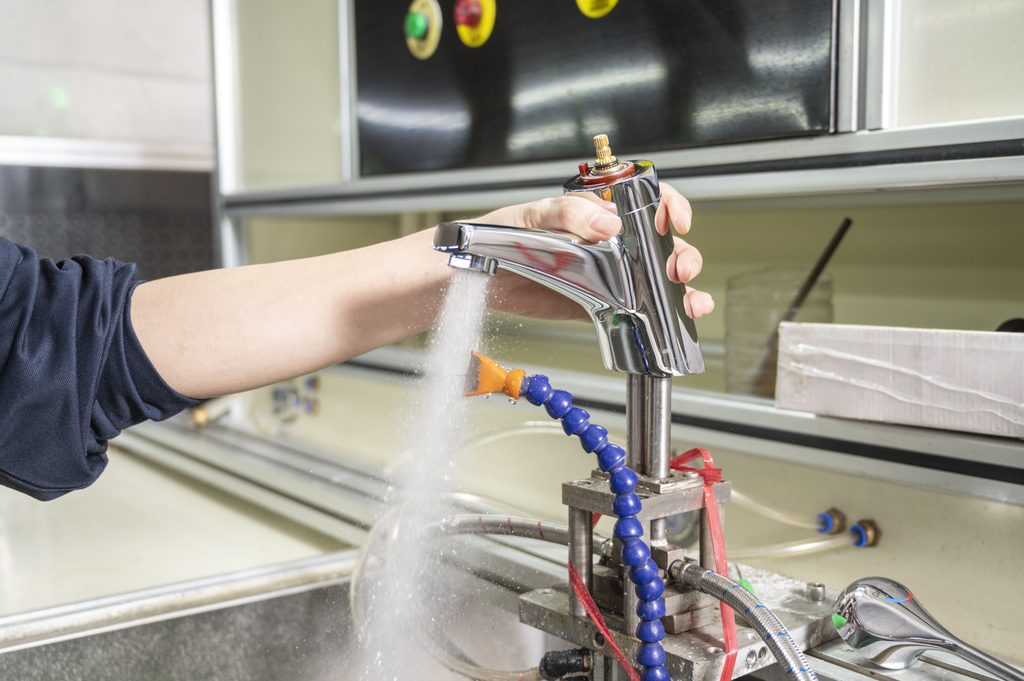
Beyond static pressure, dynamic leak testing simulates real-world conditions where water pressure fluctuates and seals experience movement from handle operation. Manufacturers use both air pressure decay and water pressure methods. Air testing, while faster for production lines, provides an efficient way to detect micro-leaks in casting pores or incorrectly seated O-rings that might otherwise go unnoticed . For shower mixers and multi-outlet systems, every water route is tested, including overhead showers, hand showers, and body sprays .
Lifecycle and Durability Testing: Simulating Years of Use
A commercial faucet undergoes thousands of operations per year in high-use environments hotel guest rooms, public restrooms, and commercial kitchens. A 50,000-cycle durability test is common for cartridges and moving parts, simulating years of use in a compressed timeframe . The test checks not only whether the cartridge continues to seal but also whether handle operation remains smooth and whether internal components show excessive wear.
For pull-out kitchen faucets and sprayers, lifecycle testing extends to hose extension and retraction, diverter switching, and spray-mode changes . These tests uncover failures that might not appear in a short functional check weak return springs, stiff diverter mechanisms, or premature wear in hose connectors.
Flow and Water Efficiency Testing: Meeting Regional Standards
Flow rate testing verifies that assembled faucets deliver the specified output. This is particularly important for projects in water-restricted regions. In the United States, the EPA WaterSense program specifies that labeled bathroom sink faucets must use a maximum of 1.5 gallons per minute, a 30% reduction from the federal standard of 2.2 GPM .
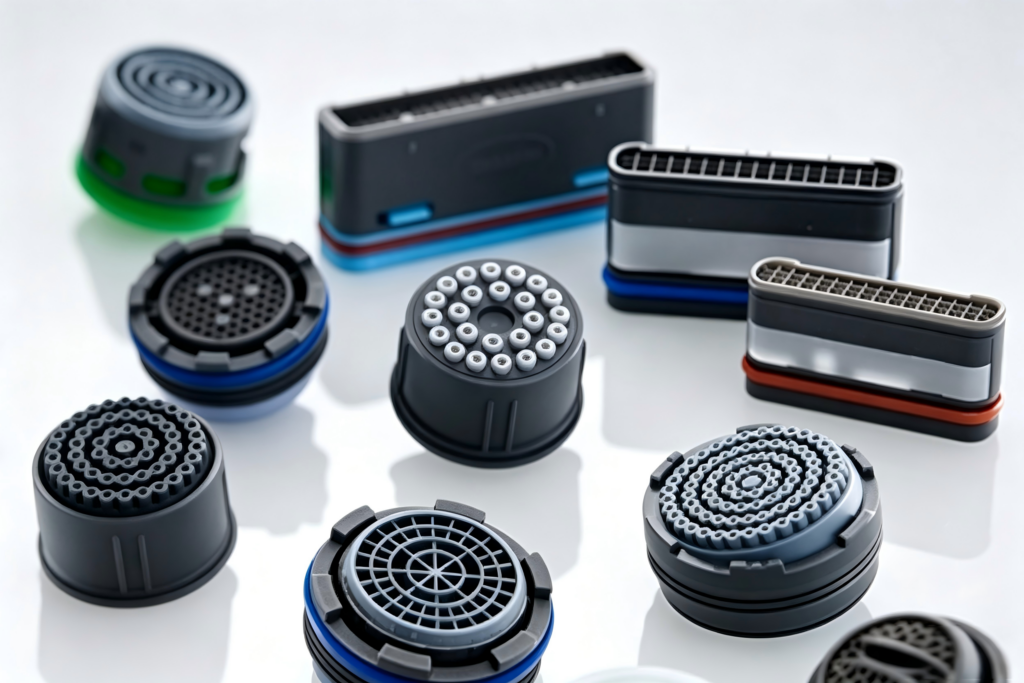
Testing confirms that the aerator, cartridge, and internal waterways work together to deliver consistent flow without exceeding limits. For shower systems, flow is evaluated across every intended outlet because overhead showers, handheld units, and body sprays each have different flow behavior . A faucet with poor flow control may feel weak to users or, conversely, waste excessive water and fail local code requirements.
Finish and Corrosion Testing: Protecting Against High-Use Environments
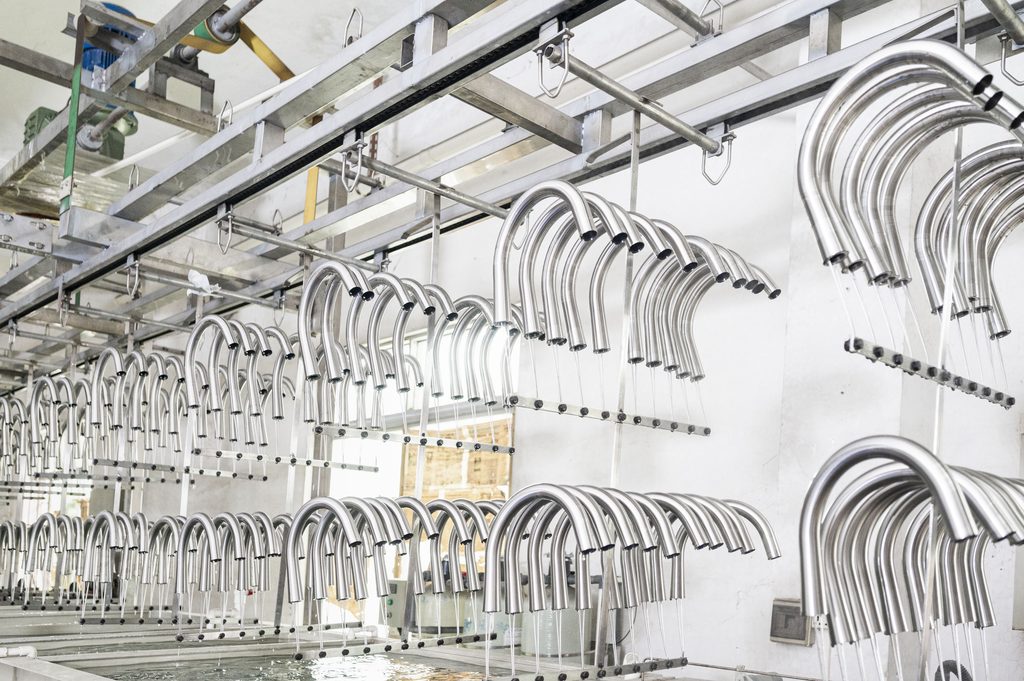
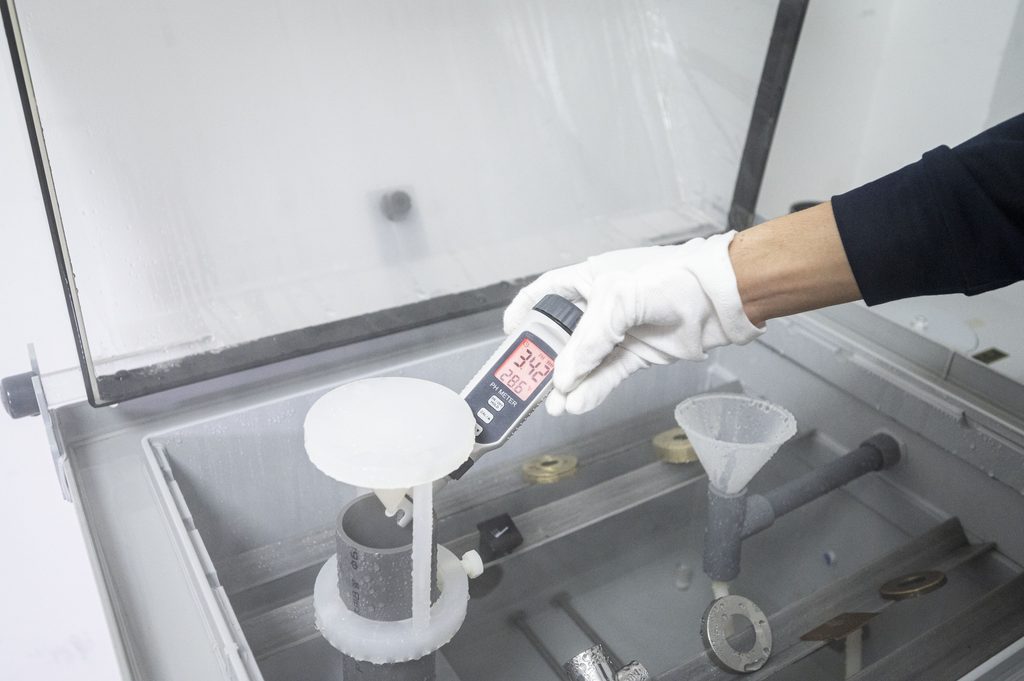
In hospitality projects, finish durability is as important as mechanical performance. A matte black faucet that shows wear after three months of guest use is a maintenance liability. Watersino adapt to 48 Hours acid
Salt spray testing evaluates corrosion resistance, measuring how well plating and coatings withstand moisture and cleaning chemicals .
Quality manufacturers apply specific coating thickness standards—for example, a nickel layer thickness of 3.5–12 μm and a chrome layer of 0.1–0.4 μm . For matte and specialty finishes, tests check for adhesion, color consistency, and resistance to scratches and stains. This is particularly important for commercial projects where hundreds of identical fixtures must maintain a uniform appearance throughout the property.
Why Experienced Manufacturers Build Testing into the Production Process
The critical distinction between a faucet supplier and a reliable commercial partner is where testing happens. Manufacturers who treat testing as a final step—an inspection that occurs only when products are ready to ship—cannot effectively control quality. By then, defects have already been built into an entire batch.
An integrated approach includes:
- Incoming material inspection: Verifying brass composition, cartridge specifications, and component dimensions before parts enter production
- In-process inspection: Monitoring machining accuracy, polishing quality, and surface treatment consistency during production
- Assembly testing: Checking sealing, handle operation, and flow performance on assembled units
- Final inspection: Confirming labeling, packaging integrity, and shipment completeness
This closed-loop system treats test results as production feedback rather than shipment paperwork. When a leak is detected at assembly, the root cause can be traced back to a specific machining issue or component lot. Corrective action prevents recurrence across the order—and future orders .
The Compliance Challenge for International Projects
For developers and contractors sourcing from overseas, testing standards are not optional. A faucet that meets European EN 817 requirements may not pass North American ASME A112.18.1 or NSF/ANSI 372 lead-free compliance. Project managers need to know not just that the manufacturer tests, but which standards they test to.
In North America, ASME A112.18.1/CSA B125.1 sets functional requirements covering flow performance, leakage, mechanical strength, and back flow prevention . For drinking water safety, NSF/ANSI 61 establishes health-effects requirements for materials that contact potable water, while NSF/ANSI 372 limits lead content to no more than 0.25% by weight .
European markets typically reference EN 200 for sanitary tapware strength and tightness, while Australia applies Watermark certification and specific thread standards. Manufacturers serving multiple markets need the flexibility to configure products for different testing frameworks and documentation requirements .
What This Means for Commercial Buyers
Understanding factory testing helps procurement teams avoid three common mistakes:
- Relying on samples without batch validation. A single perfect sample does not guarantee consistency. Discussing testing standards and batch inspection protocols before order confirmation reduces the risk of shipment surprises .
- Overlooking the compliance documentation. Certificates and test reports are not administrative paperwork; they are evidence that the manufacturer actually performed required testing. Requesting documentation for critical tests—particularly pressure, leakage, and material safety—provides accountability.
- Assuming all finishes perform equally. Matte and specialty finishes often require additional corrosion testing. Confirm that the factory’s test protocols cover the specific finish your project specifies .
Watersino’s Approach to Faucet Quality Inspection and Testing
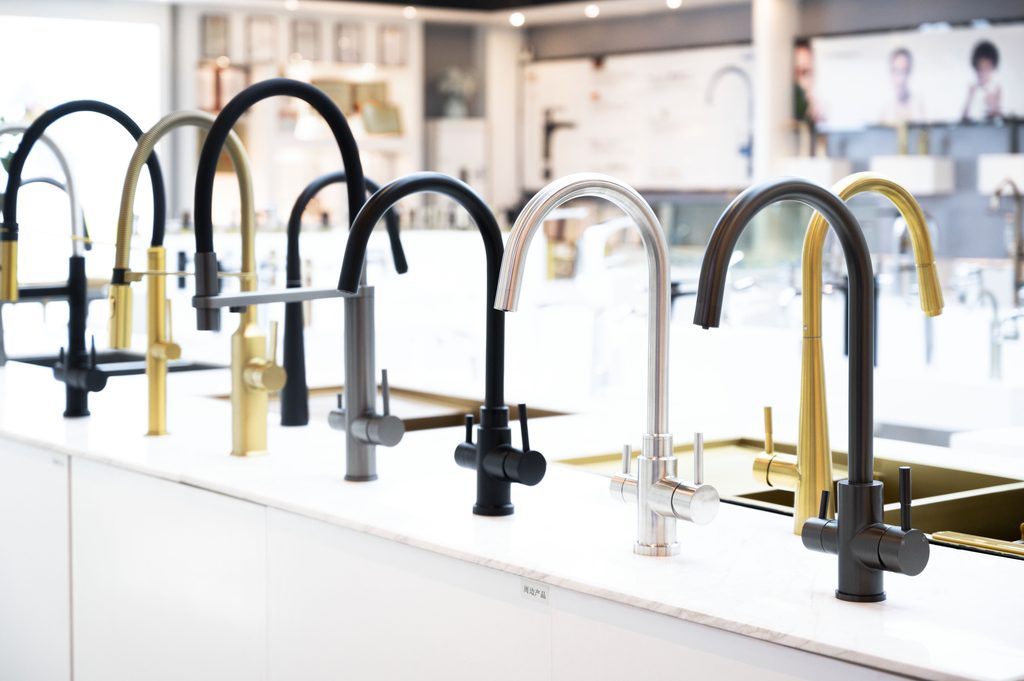
With 22 years serving hotel projects, resorts, and commercial developments, Watersino has learned that rigorous faucet quality inspection is not about meeting the minimum standard—it is about preventing failures before they reach the job site. Our testing framework integrates material inspection, in-process quality checks, and final performance validation across bathroom faucets, shower mixers, and bathroom accessories.
Our commercial-grade products undergo:
- Leak and pressure testing at levels exceeding ASME and EN standards to verify sealing integrity across all water routes
- Lifecycle durability testing on cartridges and moving parts to ensure performance consistency in high-use environments
- Flow rate verification aligned with water-efficiency standards including EPA WaterSense where applicable
Finish evaluation including acid salt spray testing to protect appearance across the full range of color options
For international projects, we support compliance configurations for Australia (Watermark ),North American (cUPC), European (CE), and other regional requirements, backed by documented test protocols and reports. Our approach is not to treat testing as a final hurdle but to build it into every stage of production, ensuring that each faucet leaving our facility is ready for the demands of commercial installation.
FAQs
Q: What is the most important test for commercial faucets?
A: Pressure/leak testing is the most critical because a leaking faucet causes immediate property damage and operational issues. However, comprehensive quality inspection includes lifecycle testing and finish evaluation, especially for high-use environments .
Q: How long should a commercial faucet cartridge last?
A: Industry standard cycle testing often targets 50,000 operations or more. This is designed to simulate years of regular use in commercial settings like hotels and public facilities .
Q: What does “lead-free” mean in faucet testing?
A: In the U.S., NSF/ANSI 372 requires that plumbing components contain no more than 0.25% lead by weight. This is a legal requirement for faucets that come into contact with drinking water .
Q: Do manufacturers test every faucet, or just samples?
A: Critical tests like pressure/leak checks are typically performed on every assembled unit. Destructive tests—like lifecycle or salt spray—are conducted on samples from production batches .