The Small Component with the Big Impact: Walk into any commercial bathroom – a hotel lobby, an airport terminal, a corporate office tower. The faucets run constantly. Guests wash hands, staff clean facilities, and water flows. Most people never think about what is happening inside the faucet spout. But procurement professionals should.
At the end of almost every faucet is a tiny device – the faucet aerator. It is small, inexpensive, and often overlooked. Yet when it comes to reducing water consumption, lowering utility bills, and improving the overall shower or hand‑washing experience, few devices are as effective as this tiny attachment.
A water‑saving aerator accomplishes three things at once: it blends air into the stream for a soft, splash‑free flow; it cuts down the actual volume of water passing through the faucet; and it keeps the pressure feeling strong and satisfying. In commercial settings, where faucets are turned on and off hundreds or thousands of times a day, the cumulative savings are truly remarkable.
In the pages that follow, we will dive into how aerator technology works, contrast a high‑end Neoperl aerator with a standard flow restrictor, and highlight why this miniature component deserves far more attention from commercial buyers. We will also introduce Watersino – a high-end engineering sanitary ware brand – and explain how its integration of advanced aerator technology delivers tangible benefits for hotels, office buildings, and public facilities.
What Is a Pipa Aerator and How Does It Work?
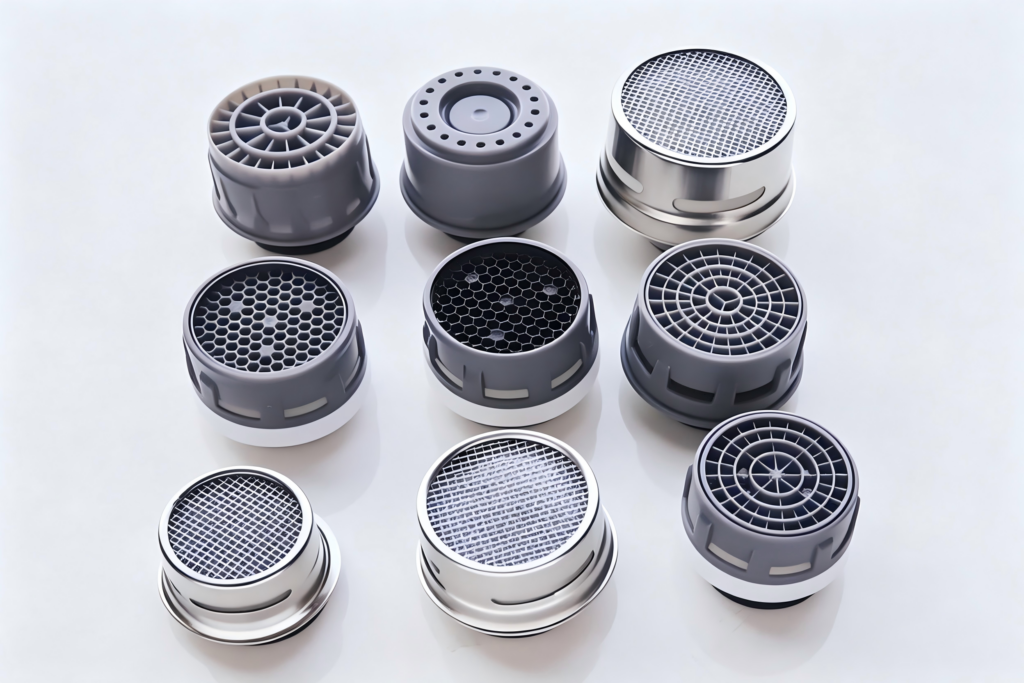
A faucet aerator, also known as a mixing nozzle, bubbler, or stream straightener, is a small component attached to the end of a faucet spout. Its primary function is to regulate the water stream by mixing air into the flow. This creates a softer, more uniform stream that reduces splashing and improves user comfort.
The mechanism is straightforward. Water passes through the aerator, where it is combined with air drawn in through small openings. The result is a stream that feels fuller and more pressurized than it actually is – even when the actual water volume is significantly reduced.
Flow reduction numbers tell the story: A typical faucet without an aerator delivers 15–20 liters per minute. A standard water saving aerator reduces that to approximately 5–8 liters per minute – a reduction of 50% to 75%. For a commercial building with 50 faucets running 10 hours a day, that translates into tens of thousands of liters saved annually.
But not all aerators are created equal. The technology behind them varies significantly, and the differences matter – especially in demanding commercial environments.
Aerator vs. Flow Restrictor – What’s the Difference?
Many people use the terms interchangeably, but there is a technical distinction between a faucet aerator and a faucet flow restrictor.
A flow restrictor is a simple device that limits water flow through a fixed-size opening. It works well at a specific pressure range but has limitations: at low pressure, flow drops significantly; at high pressure, flow can exceed what is needed, wasting water. Flow restrictors are essentially passive – they do not adapt to changing conditions.
A water saving aerator, by contrast, is a more sophisticated device. It mixes air with water to create a soft, aerated stream that reduces splashing and improves the feel of the flow. Premium aerators go further: they include pressure-compensating mechanisms that maintain a consistent flow rate regardless of pressure fluctuations.
The distinction is critical for commercial buyers. In a hotel or office building, water pressure can vary throughout the day – during peak usage, pressure drops; during off-hours, it may rise. A basic faucet flow restrictor will deliver inconsistent performance. A high-quality faucet aerator with pressure compensation will deliver the same user experience, hour after hour.
The Technology Behind Premium Aerators – Neoperl and Beyond
When industry professionals discuss premium aerator technology, one name consistently appears: Neoperl aerator. Neoperl is a Swiss-based manufacturer that has pioneered many of the innovations in this space.
PCA (Pressure Compensating Aerator) Technology
PCA aerators use an O-ring that deforms under water pressure, adjusting the size of the flow opening to maintain a nearly constant flow rate. This means that whether the water pressure is 20 psi or 80 psi, the flow rate remains stable. For commercial applications – where pressure fluctuations are common – PCA technology ensures consistent performance and predictable water usage.
DUAL CORE Technology
An evolution of PCA, DUAL CORE technology delivers a full, aerated stream even from pressures as low as 0.2 bar (2.9 psi), reaching nominal flow rates from 0.7 bar (10.2 psi). This “all-pressure” capability makes it ideal for faucets with restrictive designs or low system pressure – common challenges in older commercial buildings.
Stream Patterns – Beyond Basic Flow
Neoperl aerators shape the water stream into different patterns: aerated (soft, bubbly, comfortable), laminar (crystal clear, vortex-free, hygienic – ideal for hospitals), spray (effective hand cleaning at low flow rates), and multi-stream (switchable between two types). This versatility allows specifiers to match the aerator to the specific use case.
Limescale Protection (SLC)
Hard water is a persistent challenge in commercial bathrooms. Premium aerators feature soft elastomer surfaces that allow limescale deposits to be rubbed off easily with a finger. This reduces maintenance frequency and extends component life.
For commercial buyers, the choice of aerator technology directly impacts water bills, maintenance costs, and user satisfaction. A premium Neoperl aerator may cost slightly more upfront, but the long-term savings – in water, energy, and maintenance labor – far outweigh the initial investment.
Why Commercial Projects Need Water‑Saving Aerators
Commercial restrooms are not the same as residential ones. They see far more traffic, the stakes for performance are much higher, and the costs – both water and maintenance – accumulate faster than you might expect.
Cutting Water and Energy Use
Think about this: a single water‑saving aerator can save a household up to 11,000 liters of water per year. Now imagine 100 faucets in a busy hotel or office tower. The numbers are nothing short of staggering. And because less hot water is needed, you also cut energy consumption – which means lower utility bills and a lighter environmental footprint.
Staying Ahead of Regulations
More and more regions are introducing strict water‑efficiency rules. In California, the CEC certifies aerators for Title 20 compliance. The EPA’s WaterSense program caps bathroom sink flow at 1.5 GPM. High‑quality aerators help commercial projects stay fully compliant – without disappointing users.
Better User Experience
A cheap or poorly designed aerator often leads to splashing, uneven flow, or weak pressure – all of which create frustration and leave a poor impression. In contrast, a premium water‑saving aerator provides a soft, smooth stream that feels pleasant and looks clean. In hotels and resorts, these small details can make a big difference to guest satisfaction.
Less Maintenance, More Savings
Hard water deposits are one of the biggest culprits behind reduced flow and early component failure. Aerators with limescale protection (SLC) and easy‑clean surfaces require far less frequent servicing. In a busy commercial bathroom, every minute a maintenance team saves is money saved.
Watersino’s Approach – Integrating Premium Aerator Technology
Watersino is not a mass-market faucet brand. Its positioning is clear: a high-end engineering sanitary ware brand focused on providing durable, specification-grade fixtures for commercial projects, hotels, and wholesale partners.
Watersino integrates premium aerator technology into its faucet lines as a standard feature – not an afterthought. The company sources Neoperl aerators from Switzerland, ensuring that every faucet delivers optimal water efficiency, stream quality, and long-term reliability.
What this means for commercial buyers:
- Water savings without compromise – Watersino’s faucets equipped with water saving aerator technology achieve flow rates as low as 1.3 liters per minute while maintaining comfortable user experience. This helps commercial projects meet strict water efficiency regulations without guest complaints.
- Consistent performance across pressure ranges – By using PCA and DUAL CORE technology, Watersino ensures that faucets deliver stable flow regardless of building water pressure fluctuations – a common challenge in large hotels and office towers.
- Reduced maintenance costs – Aerators with limescale protection and easy-clean designs minimize the need for frequent servicing. In hard water areas, this translates into real operational savings.
- Regulatory readiness – Watersino’s faucets are designed to meet or exceed international standards, including NSF/ANSI 61, Wels, CE, and WaterSense criteria where applicable. This simplifies procurement for multi-region projects.
- Customization and OEM – For large commercial projects, Watersino offers custom branding, specific flow rate configurations, and matching accessories – all while maintaining the same premium aerator performance.
Watersino’s engineering philosophy is simple: every component matters. The faucet aerator – often overlooked by other manufacturers – receives the same attention to quality as the faucet body, the cartridge, and the finish. For commercial buyers, this means fewer callbacks, lower water bills, and a better end-user experience.
Practical Considerations for Commercial Buyers
When specifying faucet aerator technology for a commercial project, consider these factors:
- Flow Rate Selection :Different applications require different flow rates. Public lavatory faucets can be retrofitted with 0.5 GPM (1.9 L/min) aerators. Hotel guest bathrooms may prefer 1.0–1.5 GPM for comfort. Kitchen sinks often need higher flow. Select the aerator that matches the use case.
- Stream Type :Aerated streams feel soft and plentiful – ideal for general guest bathrooms. Laminar streams are crystal clear and hygienic – preferred in hospitals and food preparation areas. Spray streams enable effective cleaning at low flow rates. Choose based on the environment.
- Pressure Compensation :In buildings with variable water pressure, PCA or DUAL CORE technology is essential for consistent performance. Without it, users experience weak flow during peak demand and waste water during off-peak hours.
- Maintenance Access :Choose aerators that are easy to remove, clean, and replace. In commercial settings, maintenance staff need to service aerators quickly. Features like tool-free removal and limescale protection reduce downtime.
- Certifikacija :Verify that the aerator meets relevant standards: NSF/ANSI 61 for lead-free compliance, WaterSense for water efficiency, and any local regulatory requirements.
Small Component, Big Returns
The faucet aerator is one of the smallest components in a commercial bathroom – and one of the most impactful. A properly specified water saving aerator reduces water consumption by 50–75%, lowers energy costs, improves user experience, and helps meet regulatory requirements.
But not all aerators deliver the same results. Premium technologies like PCA, DUAL CORE, and limescale protection – found in Neoperl aerator products – provide consistent performance, reduced maintenance, and long-term reliability that basic faucet flow restrictor solutions cannot match.
Watersino has built its brand around engineering excellence. By integrating premium aerator technology into every commercial faucet, Watersino delivers water savings, regulatory compliance, and operational efficiency – all without compromising the luxury experience that guests and users expect.
Često postavljana pitanja
A flow restrictor uses a fixed opening to limit water flow – it performs reliably at a specific pressure range, but its effectiveness varies when pressure fluctuates. A faucet aerator, on the other hand, blends air into the water to produce a soft, splash‑free stream. Premium aerators incorporate pressure‑compensating mechanisms that ensure stable flow regardless of pressure changes.
A standard aerator cuts flow from 15–20 litres per minute down to 5–8 litres per minute – representing a reduction of 50% to 75%. For a building equipped with 50 faucets, annual savings can total hundreds of thousands of litres. When combined with lower hot water consumption, energy savings are equally significant.
PCA (Pressure Compensating Aerator) technology employs an O‑ring that flexes under water pressure, adjusting the size of the flow opening to keep the flow rate nearly constant – even when supply pressure fluctuates. This guarantees consistent performance in buildings where water pressure varies throughout the day.
An aerated stream introduces air into the water, producing a soft, bubbly flow that feels abundant and minimises splashing. A laminar stream is transparent, swirl‑free, and natural
In cases of substantial water reduction, pressure variations may lead to temperature fluctuations, depending on the mixer faucet and the overall plumbing system. That is why selecting the right flow rate category for each application is important. Premium aerators featuring PCA technology help minimise these issues.