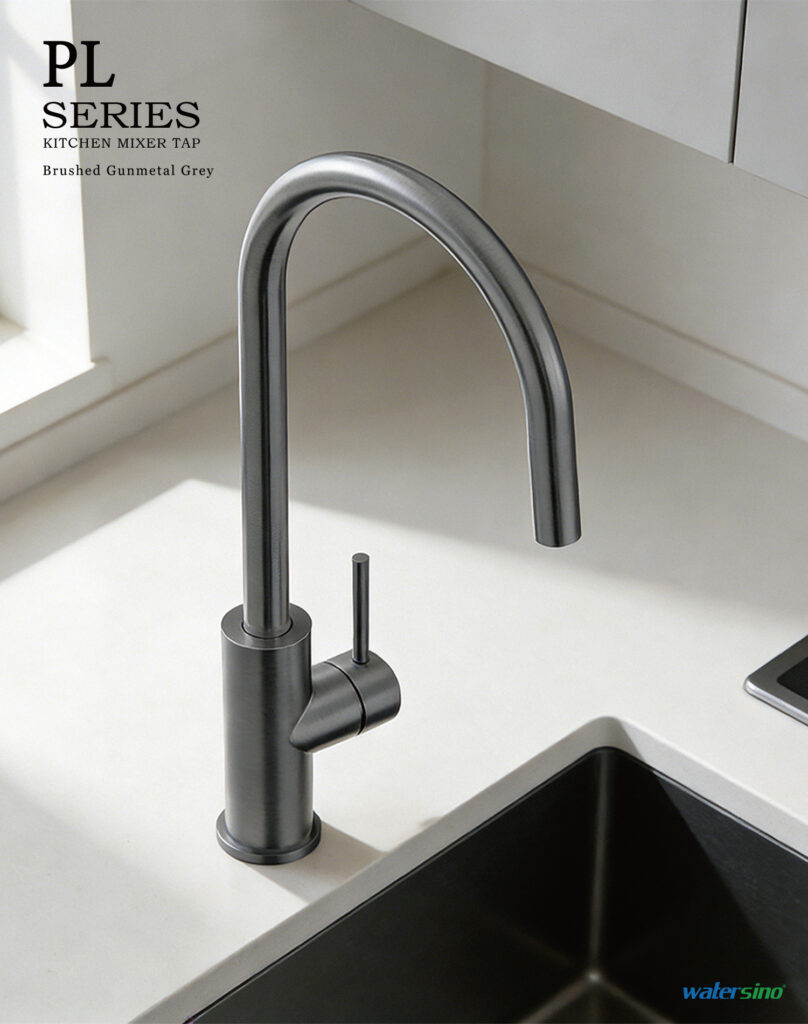
Choosing a brushed nickel kitchen faucet for a hotel, resort, high-end residential tower, or commercial bathroom project is rarely straightforward. Many engineering clients end up with visible batch color differences, finishes that corrode within two years, or certification documents that don’t match the delivered goods. This article compares satin nickel kitchen faucets, a polished nickel kitchen faucet, and other kitchen faucets nickel finish options from a real-world project perspective. We explain why brushed nickel often outperforms the others in durability, maintenance, and value for money, but only when sourced from a supplier that controls plating thickness, batch consistency, and regional compliance. We also introduce Watersino’s brand positioning — a high-end engineering sanitary ware brand focused on project solutions — and show how its practical approach solves everyday procurement headaches without overcomplicating the specification process.
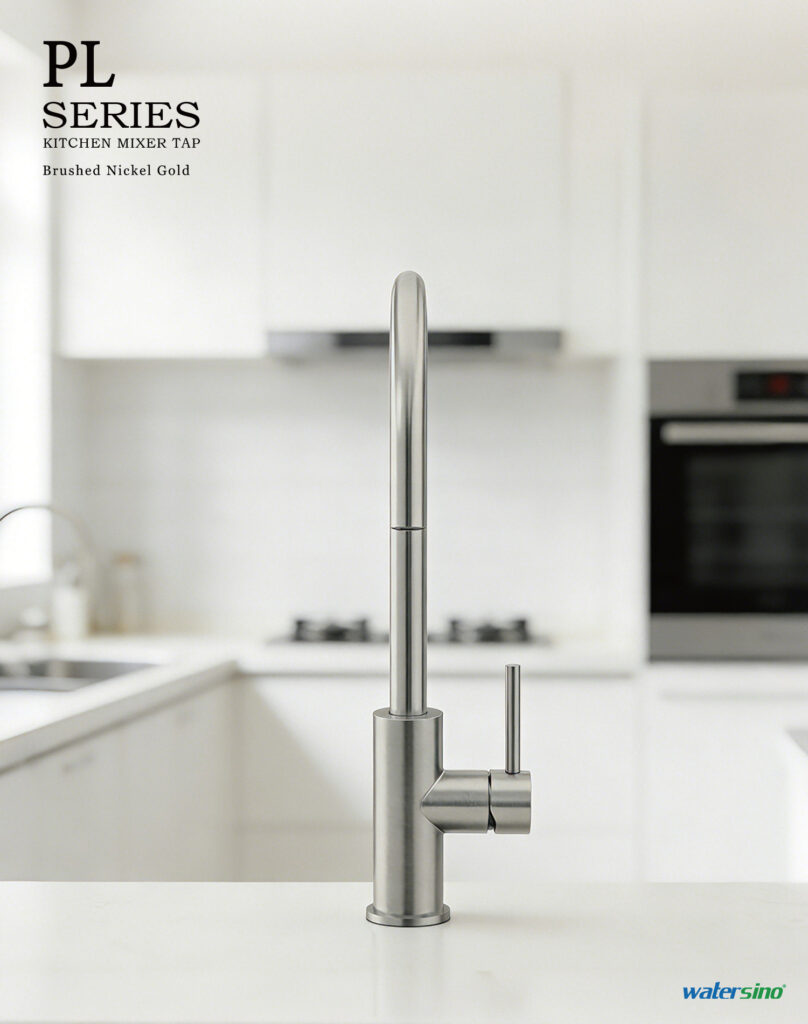
Why Choosing a Faucet Finish Feels Harder Than It Should Be
If you’ve ever managed a hotel renovation or a luxury residential development, you know the feeling. You select a beautiful brushed nickel kitchen faucet from a sample, approve it, and wait for delivery. Then the containers arrive — and the faucets don’t quite match. Some look slightly more yellow. Others show tiny water spots after just one week of use. A year later, the finish near the coastline resort starts pitting.
This is not your fault. It’s a common gap between how faucets are marketed and how they actually perform in real project environments.
In this article, we’ll walk through the pros and cons of brushed nickel, how it compares to satin nickel kitchen faucets and a polished nickel kitchen faucet, and — most importantly — what you as an engineering client can actually do to avoid costly mistakes. We’ll also share how some project-smart brands (including Watersino) have rethought their approach to nickel finishes, so you can make a confident decision.
The Four Project Scenarios Where Nickel Faucets Cause the Most Trouble
And as we known ,different projects have different stress points,so this article start with this pressure point from four real project environments.
- Hotel Projects – “Why do the faucets on floor 8 look different from floor 12?
Hotels buy in volume. Hundreds of guest rooms, same spec. But many suppliers cannot maintain the exact same kitchen faucets nickel finish across multiple production batches. The result? A subtle but visible color shift that guests notice – and affect the hotel’s review. - Resorts – “The finish started peeling after 18 months near the beach.
Salt air ,humidity, and aggressive cleaning chemicals are brutal on faucets. A standard brushed nickel kitchen faucet might look fine in a showroom, but in a coastal resort, thin nickel layers fail fast. Resorts need finishes that can survive real punishment. - High-End Residential – “The faucet doesn’t match the cabinet handles.
Luxury home buyers pay for perfection. When a polished nickel kitchen faucet or a brushed nickel unit has even a slight undertone mismatch with other bathroom hardware, it becomes a punch-list item that delays project closeout. - Commercial Bathrooms – “After two years, the faucets look ten years old.
Airports, offices, shopping centers — high traffic, aggressive cleaning crews, and little patience for delicate finishes. Satin nickel kitchen faucets often show scratches too easily. Polished nickel is out of the question. What works best here is a properly engineered brushed nickel surface.
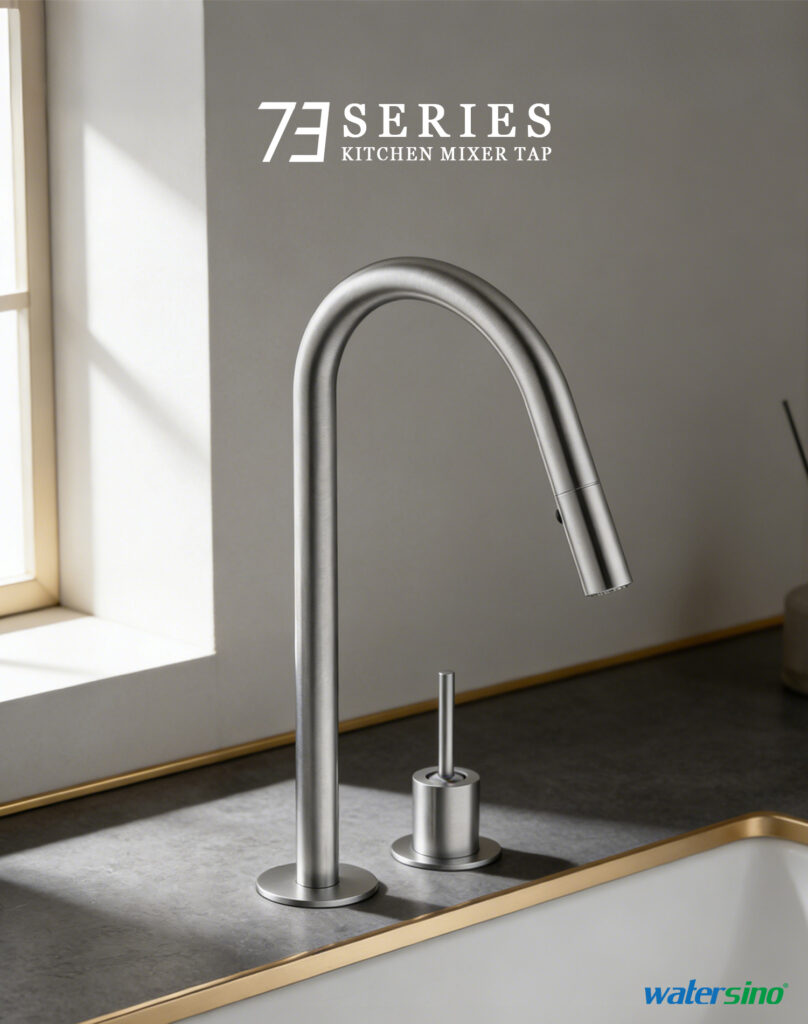
Brushed Nickel vs. Satin Nickel vs. Polished Nickel – A Simple Comparison
You don’t need a materials science degree to get this right. Here is how the three finishes actually behave on the job.
| Característica | Níquel cepillado | Satin Nickel | Polished Nickel |
| How it looks | Warm, matte, soft glow | Smooth, slightly cooler, low shine | Very shiny, like chrome but warmer |
| Hides fingerprints and water spots | Excelente | Good | Poor |
| Hides scratches | Excellent (directional grain) | Medium | Very poor |
| Cleaning effort | Easy–just wipe | Easy | High–constant polishing needed |
| Durability in coastal/humid environments | High (if plated correctly) | Medium | Bajo |
| Best for | Hotels, resorts, commercial, residential | Modern indoor projects with low humidity | Luxury homes with daily cleaning staff |
Bottom line for engineering clients: If you want a brushed nickel kitchen faucet that actually lasts, the finish itself is only half the story. The other half is how well it is made — and that depends entirely on the supplier’s plating process and quality control.
Why Some Brushed Nickel Faucets Fail – And Others Don’t
A brushed nickel kitchen faucet starts as a brass or stainless steel body. The nickel layer is applied through electroplating or PVB, then brushed to create that soft, matte texture. The difference between a faucet that lasts 10 years and one that fails in 2 years comes down to three things:
- Nickel layer thickness – Thin plating (<3 microns) will corrode quickly. Project-grade needs at least 5–7 microns.
- Batch color control –Without spectrophotometer verification, you will get color drift between orders.
- Regional certification – A faucet that is fine for Europe may fail US lead standards. Your supplier must know which market you are shipping to.
Many faucet brands skip these steps to save money. Engineering clients then pay the price in rework, delayed occupancy, and unhappy end users.
Watersino's Approach – Engineering Nickel Finishes for Real Projects
Watersino not as just another faucet supplier, but as a high-end engineering sanitary ware brand built specifically for project clients like hotels, developers, and commercial contractors.
So what does Watersino do differently for brushed nickel faucets?
- Thicker nickel plating (7–12 microns) – That’s roughly double what many “project grade” suppliers provide. It means the finish resists corrosion far longer, even in coastal resorts or high-humidity commercial bathrooms.
- Batch-to-batch color consistency – Watersino is dedicated quality inspectors to control the issue of color differences. In plain word: the faucets on floor 12 will look exactly the same as those on floor 2.
- Multi-region certification ready – Their brushed nickel faucets are available with CE, Fundación Nacional de Ciencias/ANSI 61, WRAS, and Filigrana certifications.
- Customization without long delays – Need a non-standard height, a different handle angle, or lead free DZR brass for a AU project? Watersino’s engineering team handles it within 60 days — not 90. If it is a product in stock, the delivery time will be faster.
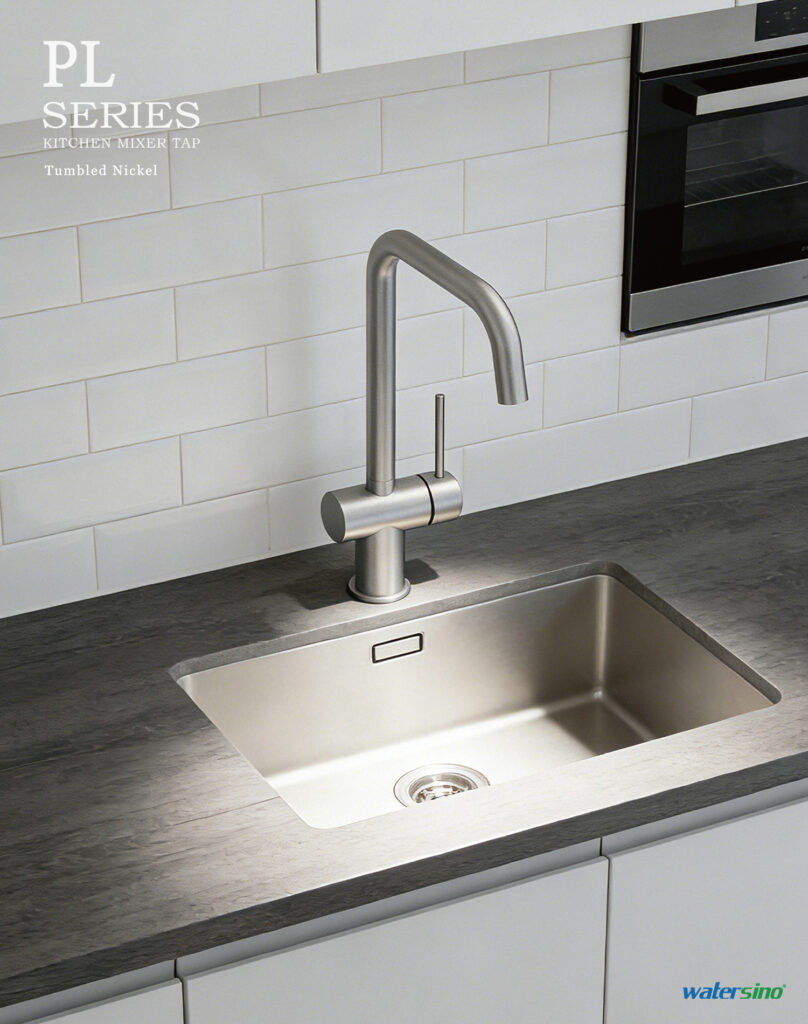
A Simple Procurement Checklist for Your Next Project
Next time you are sourcing a brushed nickel kitchen faucet for a hotel, resort, residential tower, or commercial bathroom, ask your supplier for these things: relevant reports, whether the product has certificates(CE, NSF, WRAS, WaterMark ), and comparing the product’s color with color samples
Get the Finish Right, Avoid the Headaches
Choosing a brushed nickel kitchen faucet does not have to be complicated. Compared to satin nickel kitchen faucets and a polished nickel kitchen faucet, brushed nickel consistently offers the best balance of durability, ease of maintenance, and visual warmth — provided the supplier builds it right.
For engineering clients — whether you run hotel projects, develop high-end residential buildings, or manage commercial bathroom installations — the real question is not “brushed or polished?” It is “which supplier can deliver consistent color, certified durability, and regional compliance without endless back-and-forth?”
Watersino has built its brand around answering exactly that question.Focus on high-end engineering sanitary ware means you spend less time chasing documents and more time moving your project forward. If you have next faucet procurement, maybe you can have a try to
Yes. Without it, your project may fail local health inspections. NSF/ANSI 61 verifies that the faucet does not leach dangerous levels of lead or other metals into drinking water.
Not anymore for most products. Post-Brexit, England, Scotland, and Wales require UKCA for many construction products.
Yes, but only if the nickel layer is thick enough (≥7 microns) and sealed properly. Thin-plated faucets will degrade within months. Watersino’s brushed nickel finishes are tested with commercial-grade cleaners to ensure no pitting or discoloration.
Yes. Many project-focused manufacturers offer OEM customization. Watersino’s typical lead time for non-stock designs is 45 days, including pre-production sample approval. Always confirm lead time before placing the order.
Only if done incorrectly. Low-quality laser etching can create micro-cracks. Watersino uses controlled-depth laser etching that preserves the full nickel layer thickness, ensuring no corrosion starts around the logo area.
The warranty is divided into three aspects, including color, the overall product, and the valve core.Watersino’s standard: 7 years on components and 15 years on the main body, and 3 years for finish.
You can buy directly. Watersino sells directly to general contractors, project management firms, and developers for orders meeting project minimums.
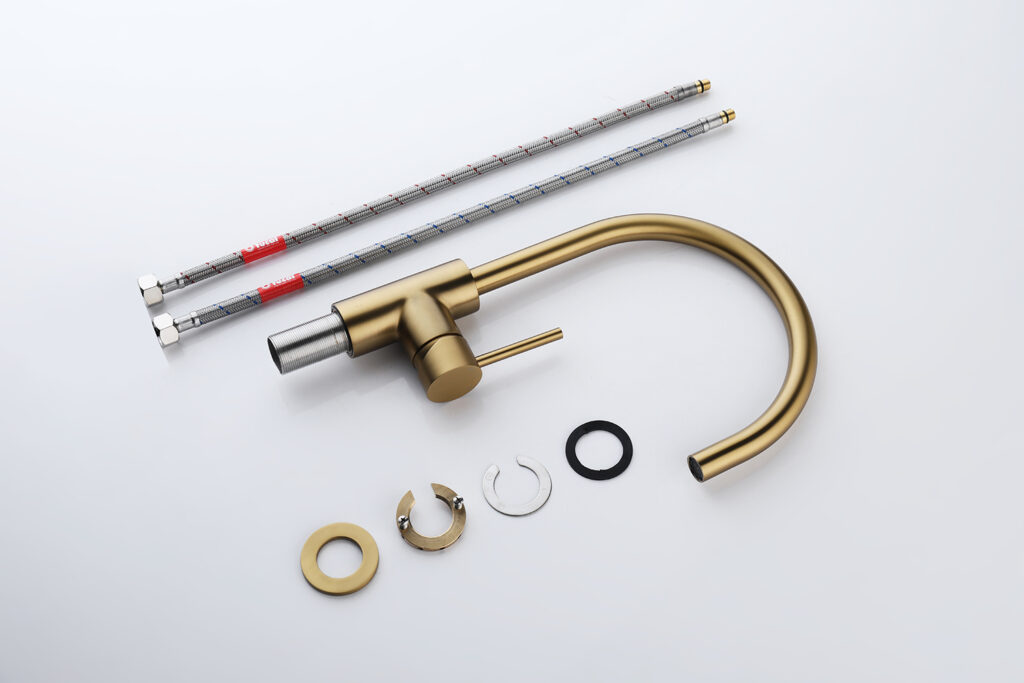
Yes. Watersino offers remote technical support, including detailed installation videos, illustrated parts breakdowns (IPB), and direct access to project engineers via email or video call. For large hotel or residential projects, Watersino can also arrange an on-site technical orientation at the client’s request. This ensures that even if local maintenance teams have never worked with brushed nickel faucets before, they can install and service them correctly. Additionally, all Watersino brushed nickel faucets come with standardized cartridge sizes and flexible hose connectors, making replacement parts easy to source locally .