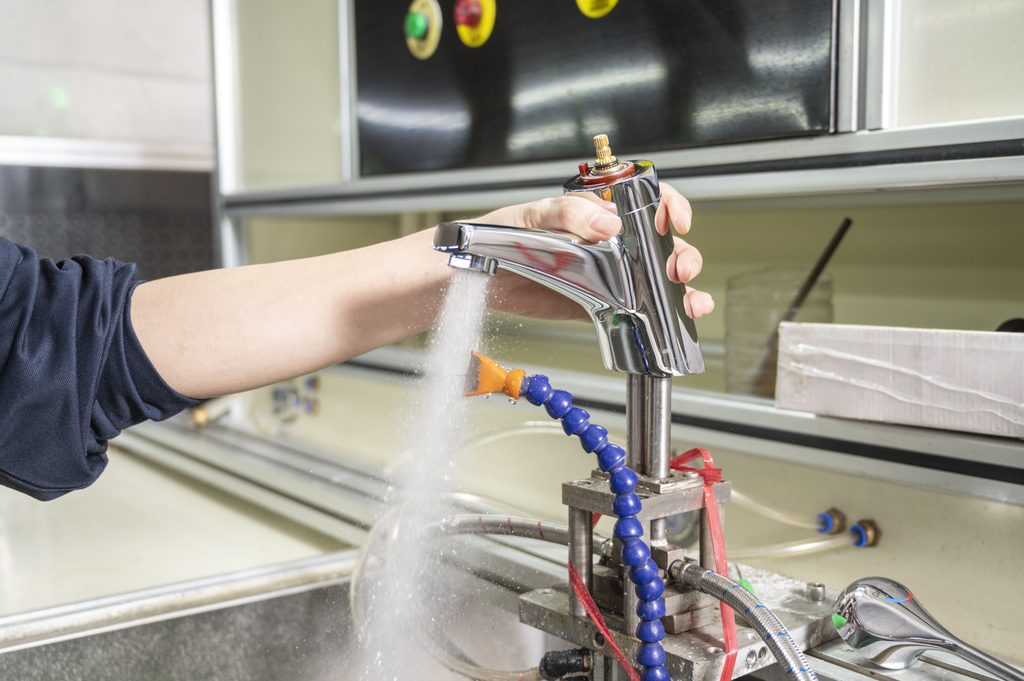
Ever asked a supplier why the ‘brushed gold’ finish on one project’s faucets starts to pit after 18 months, while the spec-sheet-identical finish on another looks perfect years later? The discrepancy between two seemingly identical kitchen faucet finishes isn’t bad luck; it’s a direct result of manufacturing decisions made long before the product was boxed. The name of the color on a quote is often just marketing.
The real story is in the base material and the coating process. A PVD finish on a solid brass body has a completely different molecular structure—and service life—than an electroplated layer on a cheaper zinc-alloy base. That trendy matte black? It’s often a simple epoxy coating that will chip if exposed to the wrong cleaning agents. Understanding the difference between 304 stainless steel vs brass faucet quality, or the real-world durability of PVD versus electroplating, is what separates a finish that lasts from one that generates warranty claims.

Understanding Faucet Body Materials
The finish gets all the attention, but the metal underneath is what determines if you have a product that lasts a decade or a problem that starts in a year. The core material of the faucet body dictates its weight, durability, and resistance to internal corrosion. It’s the first and most important specification to get right, because no PVD coating can save a body made from inferior metal.
There’s a reason brass has been the benchmark for decades. From a manufacturing standpoint, it’s ideal: it’s easily machined, allowing for complex and precise designs without excessive tool wear, and it casts cleanly. For the end product, it offers excellent durability and natural corrosion resistance. Modern lead-free brass alloys (like H59 or H62) meet all international standards for safe drinking water, making this the go-to choice for any premium or mid-market faucet line where reliability is non-negotiable.
When absolute durability is the goal, 304-grade stainless steel is the answer. It’s inherently lead-free and offers superior corrosion resistance compared to brass, making it the best material for luxury kitchen faucets in harsh environments like coastal regions or areas with aggressive water. The trade-off is cost. Stainless steel is much harder than brass, which means it’s tougher to machine, requiring more time and more robust tooling. This directly translates to a higher unit price, but for projects where longevity is the primary concern, the investment is justified.
Here’s where you need to be vigilant. Zinc alloys (often called Zamak) are frequently used to cut costs. While they look and feel substantial when plated, they are far more brittle and susceptible to internal corrosion than brass. A faucet body made of zinc alloy is a ticking clock; it will fail. This is a common corner-cutting tactic: a supplier might use a brass spout but a zinc body. Always demand clear OEM faucet material specifications for every single component. Plastic has its place in non-pressurized parts like aerator housings, but if the main body or base is plastic, you are looking at a low-end, disposable product, not something suitable for a serious project.
| مادة | Composition & Feel | Performance & Durability | Sourcing & Application Focus | Market Positioning |
|---|---|---|---|---|
| نحاس صلب | Copper-zinc alloy; substantial weight, premium feel. Ideal for complex, cast designs. | The industry benchmark for longevity. Excellent resistance to corrosion and hard water damage, ensuring long-term structural integrity. | Best for luxury kitchen faucets and premium projects. Higher upfront cost justifies long-term brand value and performance. | Premium / Gold Standard |
| 304 Stainless Steel | Iron alloy with chromium & nickel; naturally lead-free with a clean, modern aesthetic. | Superior corrosion resistance, significantly outperforming zinc alloys, especially in humid or coastal areas. Highly durable and hard-wearing. | A strong, durable alternative to brass. Balances cost, modern aesthetics, and performance for mid-to-high-tier product lines. | High-Grade / Professional |
| Zinc & Plastic | Lightweight materials. Zinc is often plated for a metallic look; plastic is used for internal or non-structural parts. | Significantly lower corrosion resistance; susceptible to pitting and degradation with prolonged water contact. Not suitable for pressurized waterways. | Used in budget-driven products or for non-critical components (e.g., handles, baseplates) to manage the zinc alloy vs brass cost difference. | Economy / Component-Specific |
A Guide to Common Faucet Finishes
The finish isn’t paint; it’s a performance coating.
The finish on a faucet is the primary interface with the user and the environment. It’s not just about color; it’s a technical coating system applied to the base material. As a sourcing professional, understanding the manufacturing process behind each finish is the only way to specify a product that won’t fail in the field.
Chrome remains the industry workhorse for a reason. It’s produced through electroplating, a mature and highly controllable process. A layer of nickel is plated onto the brass body for corrosion resistance, followed by a very thin but hard layer of chromium for the bright, reflective finish. When done correctly, it’s incredibly durable and easy to clean. The failure point is almost always a supplier cutting corners on the thickness of the nickel underlayer, leading to premature corrosion and flaking.
Brushed Nickel offers a warmer tone and is excellent at hiding fingerprints and water spots, making it a practical choice for high-use areas. The finish is typically achieved by mechanically brushing the nickel plating layer before applying a final clear protective coating. The key risk for a private label brand is batch-to-batch color consistency. You must establish an acceptable color range with your OEM partner to ensure faucets shipped in March match the ones from September.
Matte black provides a striking modern look, but it demands specific manufacturing and care protocols. Unlike plated finishes, most matte black is an epoxy powder coat that is electrostatically applied and then cured under heat. This method is fundamentally less durable than metallic plating. It’s more susceptible to chipping from impacts and scratching from abrasive cleaners. Any OEM faucet manufacturer for matte black must provide clear guidance: use only pH-neutral soap, as harsh chemicals can degrade the epoxy and lead to warranty claims.
- PVD (Physical Vapor Deposition): This is the most durable finish available. The process involves bonding the finish material to the faucet at a molecular level inside a high-vacuum chamber. This creates a surface that is exceptionally resistant to scratches, tarnish, and corrosion. This is the correct brushed gold faucet manufacturing process for luxury applications.
- PVD vs. Electroplating Durability: While a standard chrome electroplated finish might be rated to pass a 48-hour neutral salt spray test (ASTM B117), a quality PVD finish can often exceed 200 hours. This is a critical faucet finish scratch resistance standard to specify for high-end projects or durable kitchen faucet finishes for rental properties where longevity is non-negotiable.
| ينهي | Process | Key Characteristics | Durability & Maintenance | Ideal Application |
|---|---|---|---|---|
| Polished Chrome | Electroplating | Bright, reflective, classic appearance; highly versatile and cost-effective. | Durable and easy to clean, but shows fingerprints and water spots. Standard scratch resistance. | High-traffic commercial projects, traditional designs, and budget-conscious specifications. |
| النيكل المصقول | Plating or PVD | Warm, soft metallic sheen; effectively conceals fingerprints and water spots. | Very durable and low-maintenance. The PVD variant offers enhanced scratch and corrosion resistance. | Versatile for both modern and traditional kitchens; excellent for family homes and durable kitchen faucet finishes for rental properties. |
| أسود غير لامع | Epoxy/Powder Coating | Bold, non-reflective, modern aesthetic; creates a strong design statement. | More susceptible to chipping and scratches from harsh chemicals or abrasives. Requires pH-neutral, non-abrasive cleaners. | Contemporary, industrial, and minimalist designs. Best for clients who understand and accept specific care requirements. |
| PVD Finishes (e.g., Brushed Gold, Gunmetal) | Physical Vapor Deposition (PVD) | Molecularly bonded finish available in various premium colors; superior color consistency. | Maximum durability; exceptionally resistant to scratches, tarnishing, and corrosion. Outperforms electroplating durability significantly. | Luxury residential, high-end hospitality, and custom faucet finishes for private label brands where performance and longevity are critical. |
How to Match Finishes with Kitchen Hardware
Matching finishes isn’t a design choice; it’s a manufacturing specification problem.
Forget the design magazine advice. The real challenge for architects and brand managers isn’t choosing between brushed nickel and gunmetal. The critical failure point is ensuring the ‘Brushed Gold’ on your faucet from one factory is an exact match to the ‘Brushed Gold’ on cabinet hardware from another factory, six months later. Relying on marketing names alone guarantees mismatched components.
The solution is to stop communicating with names and start specifying with data. True consistency across a project or a private label product line comes from treating color and finish as a technical requirement, just like material grade or thread size. This is non-negotiable for maintaining brand integrity.
- Master Sample: Establish a physical ‘master sample’ for each finish. This becomes the non-disputable source of truth, not a photo or a catalog name. All production parts must be compared directly against this physical standard.
- Process Lock-In: Specify the manufacturing process. A PVD-coated gold has a different molecular bond and sheen than an electroplated one. A matte black finish from an epoxy powder coat will have a different texture and chip-resistance than one from a liquid spray. You must lock in the process to lock in the finish.
- Color Tolerance (ΔE): Use a spectrophotometer to measure color variance. Professionals specify an acceptable Delta E (dE) value—the numerical distance between two colors. For high-end architectural projects, demand a dE of less than 1.0 between the master sample and any production part. If a supplier doesn’t know what Delta E is, they can’t guarantee consistency.
When you specify `custom faucet finishes for private label` projects, your Request for Quotation (RFQ) must include these points. The benchmark for a serious OEM partner is their ability to control color to a Delta E tolerance of 1.0 or less. Anything wider, and you risk visible variation across your product line.
Cleaning and Maintaining Different Faucet Finishes
The wrong cleaning solvent can delaminate a finish, turning a high-end installation into a warranty claim overnight.
Your specified finish is only as good as the maintenance protocol that follows it. Providing clients with incorrect or generic cleaning advice is a primary cause of premature finish failure. The goal isn’t just cleaning; it’s preserving the integrity of the coating system. Each finish has a different manufacturing origin and, therefore, a different chemical vulnerability.
Here’s the breakdown from a manufacturing perspective, focusing on failure modes.
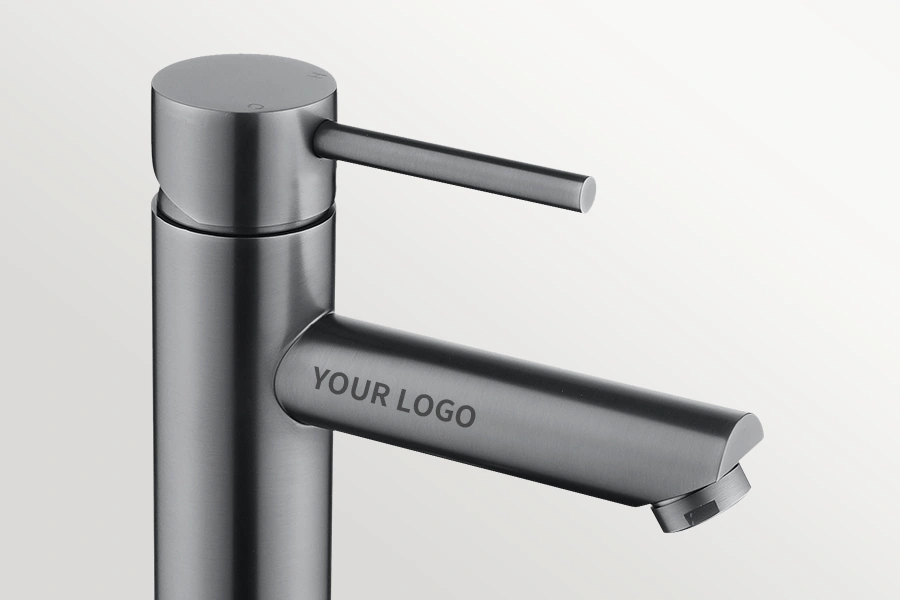
- PVD Finishes (Brushed Gold, Gunmetal): This is the most robust finish. Physical vapor deposition creates a ceramic-like bond at the molecular level. It’s highly resistant to chemicals and discoloration. The main risk is not chemical, but mechanical: abrasive grit in a dirty cloth can cause micro-scratches. Advise clients to use only soft microfiber cloths with water or a pH-neutral cleaner. The difference in pvd finish vs electroplating durability is most obvious here.
- Chrome & Brushed Nickel (Electroplated): These are multi-layer systems. Aggressive cleaners containing chlorine or ammonia can penetrate microscopic pores in the top layer and attack the underlying nickel or copper, causing blistering and peeling. The failure isn’t the chrome itself, but the adhesion between layers. Specify only mild soap and water.
- Matte Black (Epoxy/Powder Coat): This is the most sensitive finish. Treat it as a high-performance paint job. It’s typically an epoxy coating baked onto the faucet body. Abrasive cleaners or pads will create shiny spots, ruining the matte effect. Harsh chemical solvents can soften the epoxy, leading to chipping. This is a critical point for any OEM faucet manufacturer of matte black; the care instructions are non-negotiable. Only pH-neutral soap on a soft cloth is acceptable.
Your specification package for the client should include a one-page care sheet detailing these specific requirements. It prevents callbacks and protects the perceived quality of your design choices long after handover.
خاتمة
Knowing the difference between a solid brass body and a zinc alloy one, or a PVD finish and simple electroplating, covers 90% of what you need. This knowledge prevents the most common sourcing failures. But the last 10% is what separates a standard project from a signature one.
That final step is moving from material specs to process validation. Don’t just ask if a finish is PVD; ask for the ASTM B117 salt spray test report that proves its corrosion resistance. Just as an IP rating provides objective proof of water ingress protection for electronics, these manufacturing process controls are the real measure of a faucet’s durability. You can start applying this deeper diligence by reviewing the detailed specifications available for our faucet collections.
Frequently Asked Questions
What is the most durable faucet finish?
PVD (Physical Vapor Deposition) finishes are the most durable options for kitchen faucets. This process molecularly bonds the finish to the faucet, creating a surface far more. Verify the finish process is PVD when specifying for high-wear commercial or luxury residential projects.
Is matte black a durable faucet finish?
Matte black is less durable than PVD or chrome because it is typically an epoxy coating. This surface is more susceptible to chipping and can be damaged by. Specify pH-neutral cleaners for maintenance to prevent premature wear on any matte black fixtures.
Which is better: solid brass or stainless steel?
Both solid brass and 304-grade stainless steel are excellent, durable choices for the faucet’s core material. While brass is the traditional premium. When evaluating suppliers, always confirm the grade of stainless steel, as lower grades or zinc-alloys will not perform the same.
Does the base metal really affect the finish?
Yes, the base metal is critical for the long-term durability and performance of the faucet. A premium finish applied over a cheap zinc-alloy body will fail much. Always specify the core body material in your sourcing documents, not just the visible finish.