OEM vs private label faucet is the first checkpoint buyers should lock before they approve a supplier, budget, or production slot. A 3-micron difference in PVD coating thickness is all it takes to turn a $50,000 faucet order into a write-off. It’s a classic story: the sample approval goes smoothly, but the mass production run fails six months post-installation. This is exactly where the strategic choice between an OEM vs private label faucet model defines your risk, your brand’s reputation, and your bottom line. It’s not just about a logo; it’s about who controls the engineering drawings and is on the hook when the quality tolerance is breached.
The decision tree is simpler than most people think. You’re either buying speed and a lower entry point—often a 100-200 unit run on an existing design—or you’re investing in true brand equity and intellectual property with a fully custom project that requires a 500+ unit commitment and your name on the molds. One path gets you to market in 90 days with a proven chassis; the other gives you a defensible product you own completely. The difference in custom faucet design manufacturing cost isn’t just in the tooling, but in the level of detail required on your Product Specification Sheet to protect that investment.
What is OEM Faucet Manufacturing?
OEM is not choosing options; it’s handing a factory your blueprint and owning the result.
Original Equipment Manufacturer (OEM) means the factory builds faucets based on your exclusive engineering files, material specifications, and design blueprints. You aren’t just putting your logo on their product; you are commissioning them to manufacture a product that you designed and that you own the intellectual property for. This model is about creating a proprietary asset, not just sourcing a commodity.
The entire process hinges on an ironclad Product Specification Sheet. This document is your contract and your quality control bible, detailing everything from the brass composition to the required cycle testing for the handle. Without it, you have no recourse when the production run doesn’t match the initial sample approval.
- You Have a Proprietary Design: If your brand’s value is tied to a unique aesthetic or a patented function, OEM is non-negotiable. It’s the only way to legally protect your design and prevent your supplier from selling it to others.
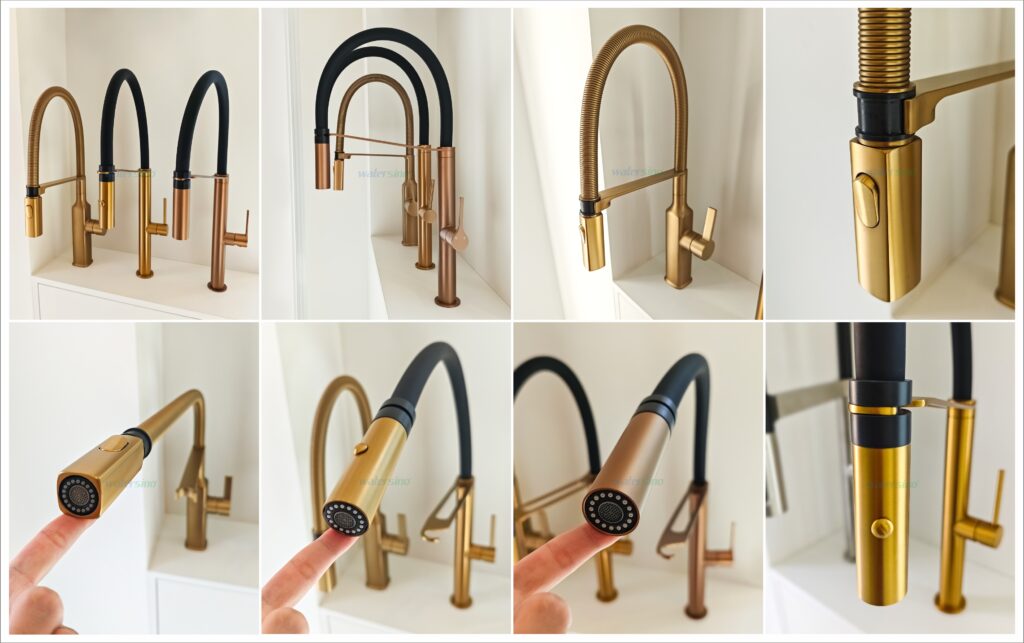
- You Require Absolute Material Control: You need to dictate every component: a specific brand of ceramic cartridge, DZR brass for corrosion resistance, or a PVD finish that must pass a 200-hour salt spray test. This granular control is the core of the OEM model.
- You Are Building a Brand Asset: You see the upfront investment in molds and tooling as a capital expenditure that creates a defensible market position. You own the tools, giving you leverage and supply chain security.
- You Can Meet Higher Commitments: You have the budget for tooling costs and can meet the higher Minimum Order Quantity (MOQ), which is typically 500+ units per design. This is not the model for testing the market with a small batch.
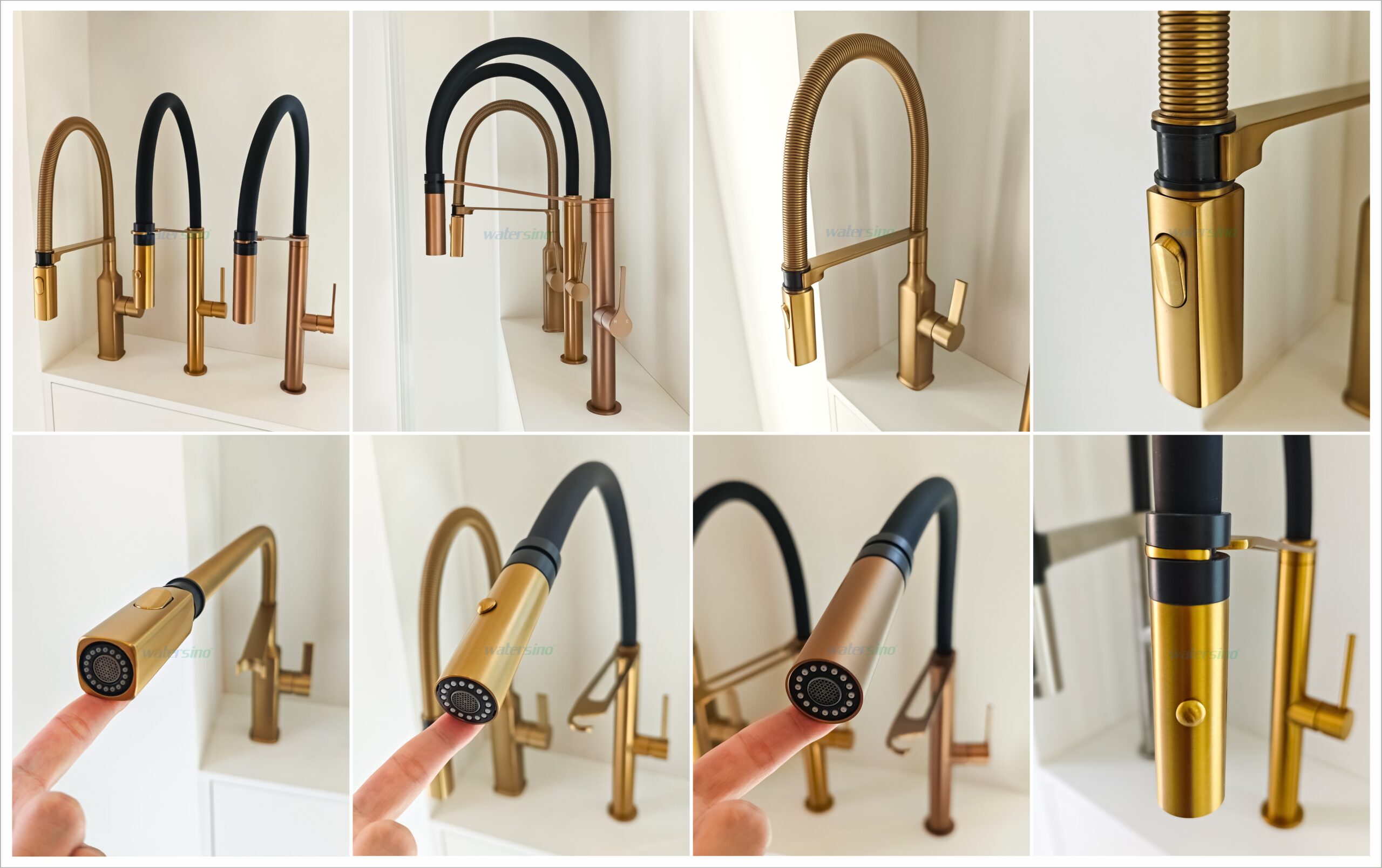
What is Private Label (ODM) Faucet Manufacturing?
ODM gets you to market in under 90 days, but your ‘unique’ faucet might be your competitor’s next week.
Private Label, or what we in the industry call Original Design Manufacturing (ODM), is straightforward. You are not inventing a new faucet; you are selecting a market-proven design from a manufacturer’s existing catalog and putting your brand on it. The factory owns the design, the tooling, and the engineering. You are essentially leasing their R&D to get your product on the shelf.
This isn’t a shortcut for building an iconic brand. It’s a strategic tool for speed. Choosing an ODM faucet is about capitalizing on a market opportunity , not building a defensible product moat for the future. The entire process is condensed from years to months because the heavy lifting is already done.
When to Choose Private Label for Faster Market Entry.
The decision to go with private label manufacturing hinges on your immediate business goals. It excels in specific situations where speed and capital efficiency outweigh the need for total design exclusivity.
- You Need Speed Above All Else: If you need to launch a product line in one fiscal quarter, ODM is your only realistic path. Bypassing the 12-18 month cycle of OEM design, prototyping, and tooling means you can go from placing a PO to receiving goods in as little as 90-120 days, pending a smooth sample approval process.
- Your Budget is Limited: OEM requires massive investment in molds, which you own. With ODM, you have zero tooling cost. This drastically lowers the financial barrier, with MOQs often in the 100-200 unit range per model, compared to 500+ for a fully custom OEM run. It’s ideal for testing a new market or style.
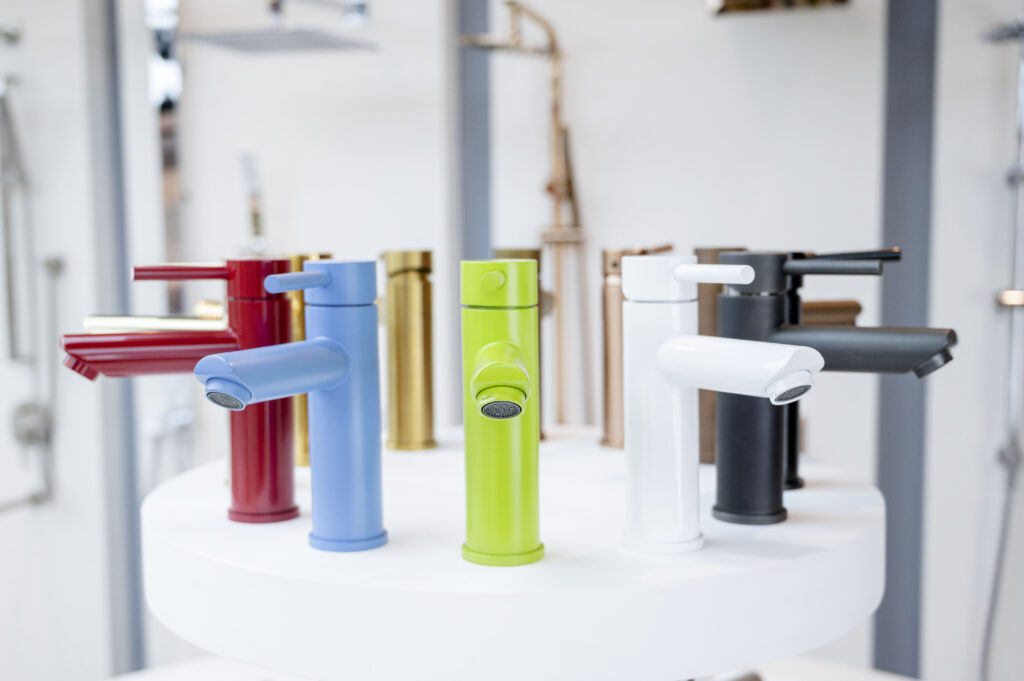
- You’re Filling a Catalog Gap: Distributors often use ODM to quickly add a missing price point or style (e.g., a matte black pull-down faucet) to their offerings without committing to a full-blown product development cycle. It’s a tactical move to ensure you don’t lose a sale.
The critical trade-off is differentiation. The factory that sells you that ODM faucet is likely selling the same core product to other brands. Your only levers for uniqueness are the finish, the logo etching, and the packaging. If your brand promise is built on exclusive design, this model will eventually undermine it.
Cost and MOQ (Minimum Order Quantity) Comparison
Private label buys market speed with low entry costs; OEM buys brand exclusivity at the price of a much higher initial investment.
Let’s cut through the noise. The choice between OEM and private label manufacturing comes down to a simple trade-off: cash flow versus brand control. It’s not just about the final FOB pricing on your invoice; it’s about the total capital you need to deploy to even get the first unit made. Anyone who tells you otherwise is either inexperienced or trying to sell you something.
This isn’t a simple ‘which is cheaper’ question. It’s a strategic decision about where you allocate risk. The numbers involved in custom faucet design manufacturing cost are significant, and understanding the MOQ is your first line of defense against a bad deal.
- Private Label (ODM) MOQs: Expect a Minimum Order Quantity between 100-200 units per SKU. Why so low? The factory has already paid for the R&D and tooling for their existing catalog. Your order is pure production. You’re paying a premium on the unit price for this convenience, but your upfront investment is minimal. This is the model for testing a market without betting the farm.
- OEM MOQs: For a truly custom design, the floor is typically 500 units, and it’s often 1,000+ for complex designs. The factory has to create new molds, which can cost anywhere from $5,000 to over $50,000. They need a large order to amortize that cost and justify the engineering time. The per-unit cost is lower, but only because you’re funding the entire setup.
- The Hidden Costs: With OEM, the tooling cost is the headline number. But you also have costs for multiple rounds of sample approval and potentially exclusive material sourcing. For private label, the ‘cost’ is the lack of differentiation; if the product is a hit, your competitor can source the exact same body from the same factory tomorrow.
| Comparison Factor | Private Label (ODM) | OEM (Original Equipment Manufacturer) | Strategic Implication |
|---|---|---|---|
| Minimum Order Quantity (MOQ) | Lower (Typically 100-200 units per model) | Higher (Typically 500+ units per custom design) | Private Label is ideal for market testing and smaller importers. OEM is for established brands with proven demand. |
| Upfront Investment (Molds & Tooling) | Minimal to None. You leverage the factory’s existing molds. | Significant. You fund the creation of new, proprietary molds. | Lower financial barrier to entry for Private Label. OEM requires substantial capital but grants design ownership. |
| Per-Unit Cost | Relatively higher, as the factory’s R&D costs are factored in. | Potentially lower at high volumes, after initial tooling costs are amortized. | Private Label offers predictable costs for smaller batches. OEM provides better long-term margins on large-scale production. |
Design Flexibility and Who Owns the Molds
The factory that owns your molds has leverage.
This is where most new brand builders get into trouble. You’re not just deciding on a design; you’re deciding who owns the physical tools that create it. The difference between OEM and private label manufacturing comes down to one expensive, heavy piece of metal: the mold. Your control over it dictates your brand’s future flexibility and security.
- Private Label (ODM): The factory owns the molds because they developed the designs. You are essentially renting their production capacity and existing tooling. This is why you can get started with a much lower MOQ, often just 100-200 units. The trade-off is zero exclusivity; your competitor can order the exact same faucet body from the same factory tomorrow.
Don’t mistake mold ownership for total IP protection. The single most important document for any OEM faucet supplier relationship is your Product Specification Sheet. This is your legal and technical bible. It must detail everything from the exact grade of brass to the required thickness of the PVD coating and the acceptable quality tolerance for cosmetic finishes. Without an ironclad spec sheet, owning the mold is useless—the factory can still cut corners on materials and processes.
Time-to-Market Differences: ODM vs OEM Timelines
The real OEM timeline isn’t the production window; it’s the 6-9 months of development that comes before mass production.
Let’s be direct. If you choose a private label (ODM) faucet from a factory’s existing catalog, you can have a container ready for shipment in 45-60 days. The process is fast because the engineering is done. The molds exist. The only steps are applying your specific finish and laser-etching your logo. It’s a simple, predictable path to market.
OEM is a different beast entirely. Budget 6 to 9 months from your initial design brief to your first production run being ready to ship. Anyone telling you it can be done in three months is either cutting corners or isn’t doing true OEM. That timeline isn’t fat; it’s the reality of creating a physical product from scratch.
- Design & Engineering: 4–6 weeks. This is the back-and-forth to turn your sketch into a manufacturable 3D model. It’s where you lock in every curve and dimension before steel is cut.
- Tooling & Mold Creation: 8–12 weeks. This is the longest, most expensive, and least flexible stage. Creating high-pressure die-casting molds for a unique faucet body is a major project. It cannot be rushed.
- Sample Approval: 4–8 weeks. You will receive T1 (first-off-tool) samples. They will not be perfect. The cycle of testing, feedback, and waiting for revised T2/T3 samples is where you align on the final quality tolerance. This is non-negotiable.
- Mass Production & Assembly: 4–6 weeks. This phase only begins after you have physically signed off on a perfect pre-production sample. This is the ‘production time’ most people mistakenly think is the entire timeline.
The final 10% that separates professionals from amateurs is sniffing out unrealistic promises. If a potential supplier quotes a 90-day timeline for a fully custom OEM faucet, they are almost certainly just modifying an existing ODM chassis. You won’t get true design exclusivity, and your intellectual property will be at risk. Real OEM takes time because it involves creating real, proprietary tooling.
A Quick Checklist to Choose Your Model
Your choice boils down to what you value most right now. Are you trying to test a market quickly, or are you building a long-term brand asset? There is no right answer, only the right answer for your specific business case.
- Private Label (ODM): This is your fastest path to market. You select a pre-existing, factory-owned design and put your logo on it. The MOQs are much lower, typically in the 100-200 unit range per model. The trade-off? You have zero intellectual property rights to the design itself. Your competitor can order the exact same faucet from the same factory tomorrow.
- OEM: This is where you build your brand’s unique identity. You provide the design, and the factory builds it exclusively for you. This path requires a much higher commitment, with MOQs starting at 500+ units for a fully custom design. You’ll also fund the tooling, but you own the mold and the intellectual property—provided you have an ironclad Product Specification Sheet locking down every detail.
- What is your real time-to-market? If you need product on shelves in 3-4 months, you must go with a private label. A full OEM process, from design finalization and mold creation to first sample approval, takes 6-9 months minimum.
- Is the design your primary value proposition? If your brand is built on unique aesthetics that nobody else has, OEM is your only option. If your value is in service, logistics, and availability, a private label product line is more efficient.
- Can you fund the tooling? A new set of faucet molds can cost anywhere from $5,000 to over $15,000. This is a non-negotiable upfront cost for any true OEM project. If that capital isn’t available, the decision is made for you: it’s private label.
- Do you have a bulletproof Product Specification Sheet? For an OEM project, your design file is not enough. You need a document that specifies materials, weight, plating thickness, cartridge brand, and the acceptable quality tolerance for every component. Without this, you have zero leverage if the mass production run doesn’t match the approved sample.
Answer these four questions honestly. Your answers will point you directly to the correct model.
Here’s the industry benchmark to remember: if you cannot confidently commit to an initial order of at least 500 units for a single design and fund the tooling, the OEM path is not yet for you. Start with private label, prove your market, and then invest in OEM to build your long-term brand equity.
Conclusión
The decision between building a faucet from your own blueprint or branding a pre-engineered design comes down to a trade-off between intellectual property and speed to market. One path gives you a defensible asset; the other gets your product on the shelf in months, not years. Your choice dictates your budget, timeline, and how much control you retain over the final product’s quality tolerance.
Here’s a simple benchmark to ground your decision: if your first production run is under 500 units per SKU, a full OEM process is rarely viable due to mold and engineering costs. Most private label projects, however, can start with as few as 100-200 units. This number is your first filter. Once you know which path aligns with your capital, you can start exploring the specific design capabilities available.
Frequently Asked Questions
What’s the main difference between OEM and private label?
With OEM, you provide your unique design specifications for the factory to build, while private label involves selecting and branding a pre-existing faucet from the factory’s catalog. OEM. Choose OEM for a unique brand asset and private label for rapid market entry.
What is the typical MOQ for OEM vs private label?
A private label faucet typically requires a Minimum Order Quantity (MOQ) of 100-200 units. In contrast, a fully custom OEM project usually starts at 500 units or more to justify. These figures can vary based on material complexity and the specific manufacturer.
Who owns the faucet design and molds?
In an OEM partnership, you own the intellectual property, including the design and the molds created for your product. With private label, the factory retains ownership of the design. Ensure your OEM contract clearly defines IP ownership in a Product Specification Sheet.
Which model is faster for getting faucets to market?
Private label (ODM) is significantly faster, often allowing you to launch a product line in under 90 days. An OEM project involves a much longer timeline due. Realistically, budget at least 6-9 months for a new OEM faucet from concept to shipment.